At the beginning of the summer
The Summer Lease
The narrator and her husband, [John](entity:character-recall-character-02aedef60104), rent a secluded colonial mansion for the summer. Its low price and long vacancy stir her suspicion that something is queer about the place, though John dismisses her sense of mystery as imagination.
The house’s isolation establishes the setting for a recovery that will increasingly resemble confinement. The narrator’s unease also exposes the gulf between her perceptions and John’s certainty as both her husband and physician.
At the beginning of the summer
The Rest Cure
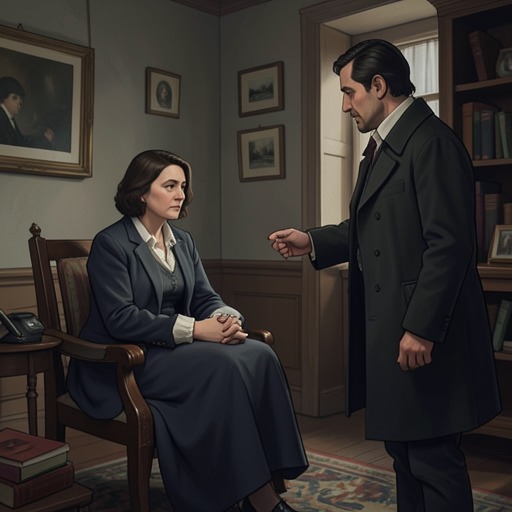
[John](entity:character-recall-character-02aedef60104) diagnoses [the narrator](entity:character-recall-character-1ef2797e1434) with temporary nervous depression and a slight hysterical tendency, insisting that nothing serious is wrong. Her brother, also a physician, agrees. The narrator privately doubts their judgment and believes congenial work, excitement, and change would help her.
Instead, John forbids her to work and prescribes tonics, travel, fresh air, exercise, and rest. The treatment takes control of her daily life while denying her own account of her suffering, setting [patriarchal medical authority](entity:concept-recall-concept-94ef18adce82) against her desire to recover through self-expression.
During the first days at the estate
Secret Writing
Despite the prohibition, [the narrator writes in secret](entity:action-recall-action-a2c22b9cab50), hiding her journal whenever [John](entity:character-recall-character-02aedef60104) or his sister [Jennie](entity:character-recall-character-58e0595b02a5) might catch her. Writing exhausts her because concealment adds strain, but she says that recording her thoughts brings relief.
Her covert pages become the only space in which she can challenge the medical story told about her. The struggle to write quietly introduces the conflict between [women's writing and self-expression](entity:concept-recall-concept-9da35dd66a50) and the enforced passivity of the [rest cure](entity:concept-recall-concept-rest-cure-9548fefa1010).
Early in the summer
The Upstairs Nursery
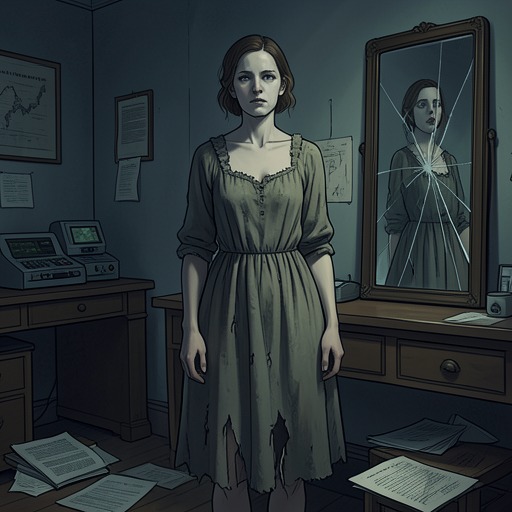
[John](entity:character-recall-character-02aedef60104) chooses the vast upstairs nursery as their room, explaining that it has abundant air and sunshine and enough space for both of them. The room’s barred windows, rings in the walls, damaged plaster, and battered furniture suggest its past as a place where children were contained and exercised.
The narrator had wanted a pleasant downstairs room, but John refuses. Her assigned room thus embodies the treatment’s central contradiction: presented as comfortable and restorative, it limits her choices and makes the house feel like a place of confinement.
Early in the summer
The Yellow Wallpaper
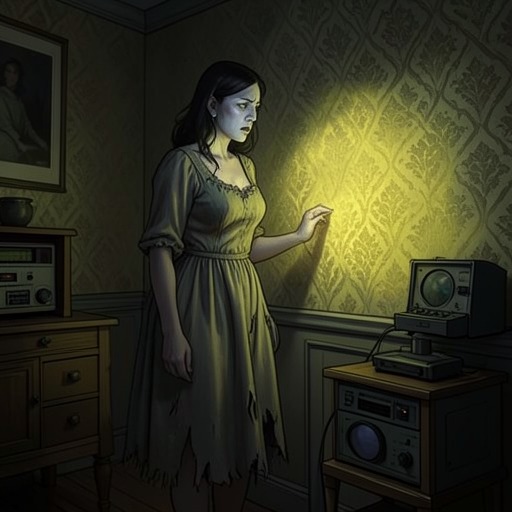
The narrator recoils from the nursery’s yellow wallpaper, describing its sprawling, contradictory pattern and repellent color. Patches have been torn away around the bed and elsewhere, while scratches and damage mark the room.
The wallpaper becomes the focus of her attention as both an irritating presence and a surface on which her isolation takes shape. Its disordered design will come to mirror her growing distress and acquire a symbolic force beyond mere decoration.
Early in the summer
A Draught in the Moonlight
One moonlit evening, [the narrator](entity:character-recall-character-1ef2797e1434) tells [John](entity:character-recall-character-02aedef60104) that the house feels strange. He calls what she feels a draught and shuts the window, translating her intuition into a physical problem he can dismiss.
Her annoyance at his response is followed by an effort to control herself, because John says she must exercise self-control. Their exchange shows how even her interpretations of the house are subordinated to his authority.
Early in the summer
The Refused Room
The narrator explains that she wanted a downstairs room opening onto the piazza, with roses at the window and old-fashioned chintz. [John](entity:character-recall-character-02aedef60104) rejects the request, citing the room’s limited space and the need to keep a nearby room for himself.
Although she calls him careful and loving, his decision leaves her in the nursery she dislikes. She feels guilty for resenting his care, revealing how marital affection and medical control are intertwined in her confinement.
Early in the summer
The Prescribed Day
[John](entity:character-recall-character-02aedef60104) sets a schedule for every hour and takes care of practical decisions, telling [the narrator](entity:character-recall-character-1ef2797e1434) that exercise depends on her strength and food on her appetite, while she can absorb air continually. She tries to regard his care as loving, even as she feels ungrateful for resisting it.
The regimen leaves little room for work or self-direction. Her growing sense of being a burden to John sharpens the emotional cost of a treatment that measures her body while discounting her judgment.
Early in the summer
The Baby Kept Apart
The narrator mentions that Mary is good with the baby and calls the child dear, but admits that being with him makes her nervous. She understands that the nursery would otherwise have been the baby’s room and regards it as fortunate that he does not have to live among the wallpaper.
Her separation from her child adds guilt and grief to her illness. She frames the arrangement as protection for the baby, even as it underscores how little control she has over her own care and family life.
During the first weeks at the estate
The Pattern’s Eyes
As [the narrator](entity:character-recall-character-1ef2797e1434) studies the paper, its design seems to stare back at her: she singles out bulbous eyes and a broken-neck shape, and becomes angry at the pattern’s unblinking persistence. She recalls how, as a child, she found expressions and companionship in ordinary furniture and walls.
That imaginative habit now feeds an intense fixation on the room. The wallpaper shifts from an unpleasant object into something she experiences as watchful and alive, foreshadowing her later belief that a figure is trapped behind it.
During the first weeks at the estate
Jennie’s Housekeeping
[John](entity:character-recall-character-02aedef60104)’s sister [Jennie](entity:character-recall-character-58e0595b02a5) is a careful housekeeper, and [the narrator](entity:character-recall-character-1ef2797e1434) suspects that she believes writing caused the illness. The narrator hides her pages and writes only when Jennie is away, watching for her approach from the windows.
Jennie’s supervision makes the narrator’s private writing more precarious. Their relationship remains outwardly kind, but the narrator experiences the household’s watchfulness as another restriction on her independence.
During the first weeks at the estate
A Figure Beneath
In certain light, [the narrator](entity:character-recall-character-1ef2797e1434) begins to discern a dim, formless shape behind the wallpaper’s bold outer pattern. The hidden figure seems to skulk beneath the design, visible only when the conditions are just right.
This first glimpse gives the narrator a new mystery to pursue. Her attention turns from the paper’s ugliness to the possibility that something is concealed and struggling behind it.
Around Fourth of July
Fourth of July Visitors
Around [Fourth of July](entity:time-recall-time-fourth-of-july-b633e714a94e), [the narrator](entity:character-recall-character-1ef2797e1434)’s mother, Nellie, and the children visit for a week. [Jennie](entity:character-recall-character-58e0595b02a5) manages the household, while the narrator does nothing and finds the company tiring despite [John](entity:character-recall-character-02aedef60104)’s hope that it will help her.
After the guests leave, the narrator feels more fretful and spends much of her time alone. The visit brings no recovery; instead, it confirms the distance between the activity others arrange for her and the work or companionship she actually wants.
After Fourth of July
Mitchell’s Threat
[John](entity:character-recall-character-02aedef60104) warns that if [the narrator](entity:character-recall-character-1ef2797e1434) does not improve more quickly, he will send her to [Weir Mitchell](entity:character-recall-character-6d95fc63b780) in the fall. She does not want to go: a friend who underwent his care said he was like John and her brother, only more so, and the journey itself seems burdensome.
The threat makes the [rest cure](entity:concept-recall-concept-rest-cure-9548fefa1010) feel even less escapable. Rather than treating her objection as evidence that the regimen is failing, John invokes a more authoritative version of the same medical control.
After Fourth of July
The Pattern’s Labyrinth
The narrator grows fascinated by the wallpaper, lying on the immovable bed for hours as she tries to follow its pattern to a conclusion. The design seems to run in disconnected columns, diagonal waves, and confusing horizontal lines, repeatedly thwarting her attempts to understand it.
Her intense scrutiny supplies an occupation where the prescribed routine offers none. At the same time, the pattern’s apparent defiance of order deepens her agitation and makes her mental life increasingly revolve around the room.
After Fourth of July
The Failed Appeal
The narrator tries to persuade [John](entity:character-recall-character-02aedef60104) to let her visit Henry's uncle and Julia, but John says her body is not yet fit for traveling, and she cannot bear the visit. She hasn't even had time to explain her reasons before she begins to cry
After the failed appeal
The Warning Against Fancy
[John](entity:character-recall-character-02aedef60104) tells [the narrator](entity:character-recall-character-1ef2797e1434) that only she can help herself, urging willpower and self-control so that her fancies will not control her. She stops mentioning her desire to leave, though she privately remains unconvinced.
The warning compounds her isolation: she is expected to manage symptoms while forbidden from pursuing the activities she believes would relieve them. The narrator’s silence becomes part of the treatment’s effect.
Several weeks into the summer
Moonlit Movement
In moonlight, [the narrator](entity:character-recall-character-1ef2797e1434) sees the faint figure behind the wallpaper seem to shake the pattern. She rises quietly to test whether the paper itself is moving; [John](entity:character-recall-character-02aedef60104) wakes and tells her not to walk about because she will get cold.
The encounter turns her suspicion into a vivid perception of a captive figure struggling to get out. It also sets up the night-time vision that will increasingly govern her understanding of the wallpaper.
Three weeks before the lease ends
The Request to Leave
The narrator tells [John](entity:character-recall-character-02aedef60104) she is not gaining at the estate and asks him to take her away. He answers that the lease has only three weeks left, repairs at home are unfinished, and work prevents him from leaving; he also insists that she is improving in weight, color, and appetite.
She disputes his assessment, pointing out that she weighs no more and eats less when he is away. His confidence in his own diagnosis overrules her account, making the requested departure another denied choice.
Three weeks before the lease ends
The Forbidden Thought
When [the narrator](entity:character-recall-character-1ef2797e1434) begins to distinguish physical improvement from mental well-being, [John](entity:character-recall-character-02aedef60104) reacts sternly. He begs her not to entertain the idea that she is not getting better, calling it a dangerous and false fancy and asking her to trust him as a physician.
She falls silent rather than risk further reproach. Afterward she lies awake wondering whether the wallpaper’s front and back patterns move together or separately, carrying the unresolved argument into her obsessive study.
After the request to leave
Bars in the Darkness
The narrator says the wallpaper changes with the light. By night, she sees the outside pattern become bars and the woman behind it become plain; by day, the figure seems subdued, as though the pattern holds her still.
The bars give [the narrator](entity:character-recall-character-1ef2797e1434)’s perception a structure of imprisonment and resistance. The woman’s confinement echoes the narrator’s own enforced rest, while the shifting light makes the room’s meaning seem to change around the clock.
After the figure appears behind bars
The Deception of Sleep
[John](entity:character-recall-character-02aedef60104) orders [the narrator](entity:character-recall-character-1ef2797e1434) to lie down after meals and sleep as much as possible. She follows the routine but often remains awake, concealing the fact from the household rather than inviting more correction.
The prescribed rest therefore breeds deception instead of recovery. As her outward quiet diverges from her inner vigilance, the wallpaper becomes the focus of a hidden life that John cannot control directly.
After the deception of sleep begins
Watching John and Jennie
The narrator grows afraid of [John](entity:character-recall-character-02aedef60104) and finds [Jennie](entity:character-recall-character-58e0595b02a5) inexplicably strange as well. She secretly watches them and catches each looking at the wallpaper; once, she sees Jennie touch it.
When questioned, Jennie says the paper stains clothes and that she has found yellow smears on both her and John’s garments. The narrator takes this ordinary explanation as concealment, convinced that nobody else must discover the pattern’s secret.
During the final week at the estate
The Paper’s Allure
The narrator feels more interested in life because she has the wallpaper to anticipate and watch. She eats better and seems quieter, so [John](entity:character-recall-character-02aedef60104) is pleased and says she is flourishing despite the paper.
She hides her belief that she is improving because of the wallpaper, fearing that John will mock her or take her away before she understands it. Her apparent improvement is now inseparable from the obsession that is drawing her deeper into the room’s imagined world.
During a week of fog and rain
The Yellow Smell
The narrator becomes preoccupied with an odor that seems to spread throughout the house, hide in its rooms, and follow her even when she goes riding. In the damp weather it grows oppressive, and she describes it as having the color of the wallpaper—a yellow smell.
The scent makes the wallpaper’s influence seem to escape its surface and occupy the entire house. Her inability to separate smell, color, and fear marks how completely her attention has been captured by it.
During the final week at the estate
The Circular Smooch
Near the baseboard, [the narrator](entity:character-recall-character-1ef2797e1434) discovers a long, even mark circling the room behind the furniture, except where the bed blocks it. She wonders who made it and why, and the repeated path makes her dizzy.
The mark becomes a physical clue that seems to connect the room’s damage with the figure’s movement. Its circular route anticipates the narrator’s own creeping around the room along the wall.
During the final week at the estate
The Woman Shakes the Bars
After watching at night, [the narrator](entity:character-recall-character-1ef2797e1434) becomes convinced that [the woman behind the wallpaper](entity:character-recall-character-3fdd96830c5f) shakes the front pattern. She sometimes imagines many women, sometimes one, crawling behind it; the figure takes hold of the bars in shadowed places and tries to climb through.
In the narrator’s account, the pattern strangles those who get through, twisting their heads and turning their eyes white. The vision fuses escape with renewed entrapment, making the wallpaper a prison that also expresses her desire for release.
During the final week at the estate
Creeping Outside
The narrator believes the woman gets out in daylight and says she has seen her creeping along the road and hiding under blackberry vines when carriages approach. She identifies the figure as the same woman because, in her view, most women do not creep in daylight.
She also says she locks the door when she creeps by day, so [John](entity:character-recall-character-02aedef60104) will not suspect her. The boundary between watching the woman and sharing her movements begins to collapse, turning the image of escape into a lived identity.
During the final week at the estate
The Faster Crawler
The narrator wonders whether she can see the woman from every window at once, but can look through only one at a time. She thinks the woman may crawl faster than she can turn and recalls seeing her moving across open country like a cloud shadow in a high wind.
Her efforts to track the figure intensify the sense that it exists independently of her, even as its movements increasingly define her own. She resolves to remove the top pattern little by little.
Two days before the couple’s departure
Two Days Remaining
The narrator decides that only two days remain to get the paper off and believes [John](entity:character-recall-character-02aedef60104) is starting to notice. She hears him ask [Jennie](entity:character-recall-character-58e0595b02a5) professional questions about her and understands that he knows she does not sleep well at night, despite her quiet behavior.
Rather than see the inquiry as concern, she interprets it as suspicion about the wallpaper. John and Jennie’s attention now appears to her to be part of a shared secret, further isolating her from them.
The night before the last day
A Night Alone
[John](entity:character-recall-character-02aedef60104) is to stay in town overnight, and [Jennie](entity:character-recall-character-58e0595b02a5) wants to sleep with [the narrator](entity:character-recall-character-1ef2797e1434). The narrator persuades Jennie that she will rest better alone, concealing her intention to act on the figure’s behalf.
Once the moonlight falls and the woman seems to crawl and shake the pattern, the narrator gets up to help her. What begins as an imagined rescue becomes a physical effort to tear the wallpaper down.
The night before departure
Tearing the Wallpaper
The narrator pulls at the wallpaper while the woman shakes it; she says they pull and shake together until they have stripped away yards of paper, including a strip about head-height and halfway around the room. At sunrise, when the pattern seems to mock her again, she vows to finish the work that day.
The destruction is the culmination of her struggle against the pattern she has come to experience as bars. It also marks the point at which her imagined partnership with the woman fully directs her actions.
The day before departure
The Last Day
The couple is due to leave the next day, and the household moves the furniture downstairs. [Jennie](entity:character-recall-character-58e0595b02a5) is astonished to see the damaged wall, but [the narrator](entity:character-recall-character-1ef2797e1434) merrily claims she tore the paper out of spite; Jennie replies that she would not mind doing the same, while warning her not to tire herself.
The narrator treats Jennie’s remark as a confession that she, too, knows the wallpaper’s secret. As servants and belongings leave, the narrator remains alone in the bare room with the bed, determined to keep anyone else away from the paper.
The day before departure
The Locked Room
The narrator locks the bedroom door and throws the key down into the front path, intending to remain inside until [John](entity:character-recall-character-02aedef60104) returns. She has a rope hidden and imagines using it to tie the woman if she escapes, but realizes she cannot reach far without something to stand on.
She tries to move the nailed-down bed, fails, and bites one corner in anger. She then strips off all the paper she can reach from the floor, imagining its distorted heads and eyes shrieking at her.
The day before departure
The Escape Refused
The narrator considers jumping from a window, then rejects the idea because it would be improper and might be misconstrued; the bars would also prevent it. She fears the creeping women outside and wonders whether they all came out of the wallpaper as she did.
She says she has secured herself with the rope and insists that nobody will get her out into the road. The idea of escape has become inseparable from confinement, and her imagined identity as one of the women has overtaken her former sense of self.
The day before departure
Creeping the Smooch
The narrator enjoys crawling around the bare room and says she does not want to go outside, where the ground is dirty and everything is green instead of yellow. Inside, she can move smoothly, with her shoulder fitting into the long smooch circling the wall so that she will not lose her way.
Her path follows the mark she previously noticed, turning the room’s damaged trace into a track for her body. The wallpaper may be partly stripped away, but the pattern of confinement has become [the narrator](entity:character-recall-character-1ef2797e1434)’s own repeated movement.
Near the ending, after the narrator locks the door
John Breaks In
When [John](entity:character-recall-character-02aedef60104) arrives, [the narrator](entity:character-recall-character-1ef2797e1434) refuses to open the door. He pounds, calls to her, and asks for an axe; she calmly tells him that the key is beneath a plantain leaf by the front steps, then repeats the instruction until he goes to retrieve it.
John enters and stops at the sight of the room. His arrival brings the private crisis into the open, but he encounters a scene he has no longer been able to govern through persuasion or prescription.
At the ending
The Final Breakdown
Still creeping around the room, [the narrator](entity:character-recall-character-1ef2797e1434) looks over her shoulder at [John](entity:character-recall-character-02aedef60104) and declares that she has finally got out in spite of him and Jane, and that she has pulled off most of the paper so he cannot put her back. Her words identify her with the woman she believed was trapped behind the pattern.
John faints across her path, and she says she has to creep over him each time she makes her circuit. The ending overturns the roles of authority and helplessness: he lies unconscious while the narrator continues moving within the room, her apparent escape inseparable from her psychological collapse.